
Why does allergy season trigger dry eye symptoms?
Allergies don’t just make eyes watery. They can inflame the eyelids and the ocular surface, which destabilizes the tear film (your eye’s natural “coating”). That tear film is what keeps vision crisp and comfortable. When it breaks up too quickly, you can get:
- Stinging or burning
- A sandy or gritty feeling
- Stringy mucus
- Redness that comes and goes
- Eyes that water but still feel dry
- Discomfort while wearing contact lenses
And yes, blurry vision that clears when you blink is a classic sign of dry eye.
Common habits that make allergies worse
Here are some common activities that can worsen your allergy symptoms:
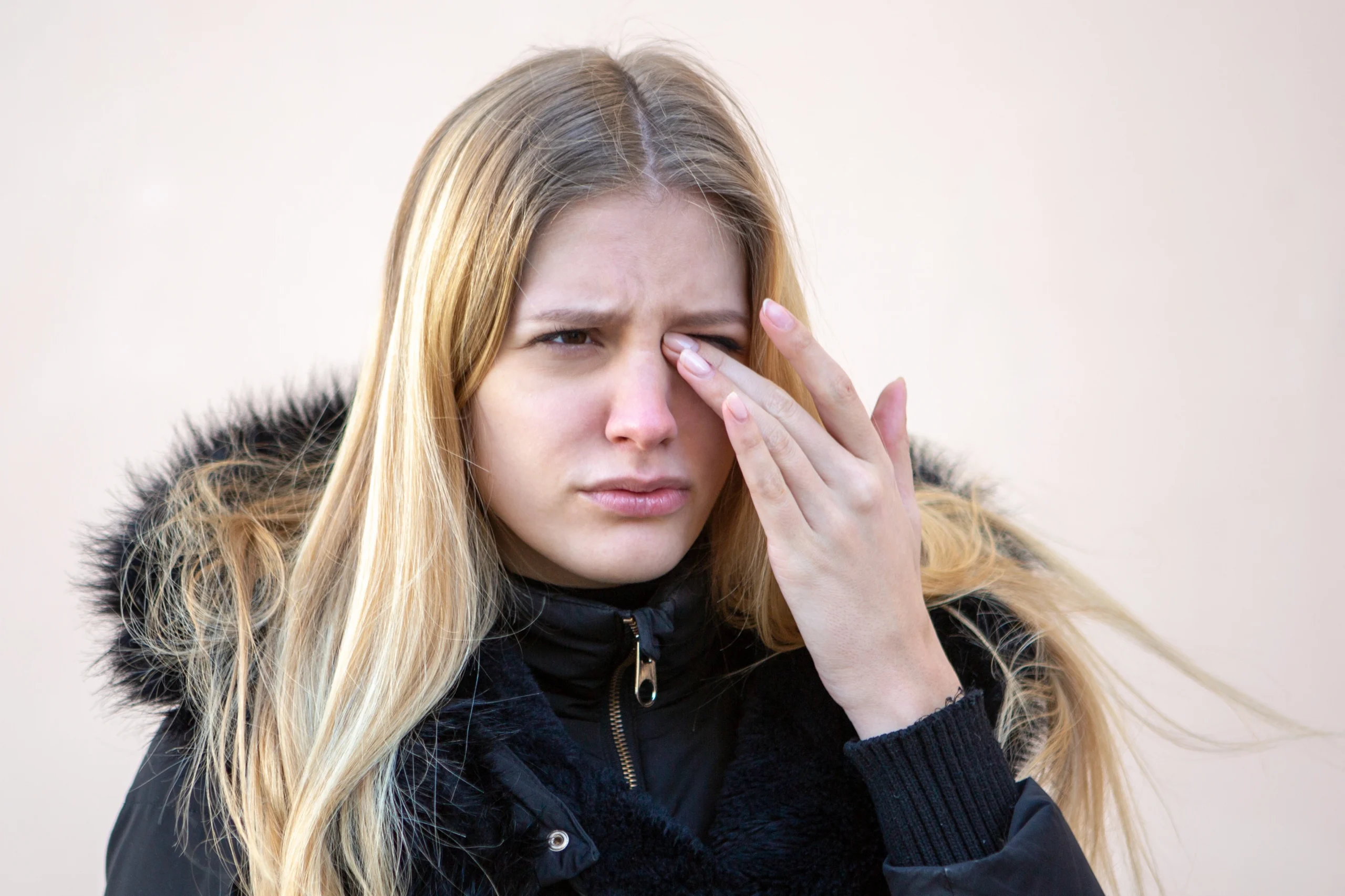
- Rubbing your eyes, which releases more histamine and increases irritation
- Using a decongestant, which can dry out your whole body
- Sitting in front of fans/vents at home or in the car
- Staring at screens
- Using the wrong drops, especially “get-the-red-out” products that can rebound
Practical at-home relief for dry eye
If your symptoms are mild to moderate, these steps can help you feel better quickly:
- Cold compresses (5–10 minutes) to calm allergy-related inflammation
- Warm compresses (10 minutes) to support oil glands in the lids
- Use gentle lid wipes or diluted cleanser to reduce debris and irritation
- Artificial tears (preservative-free if you use them often) for lubrication
- Wraparound sunglasses outdoors to block wind and pollen
- A humidifier in the bedroom
Allergy drops vs. dry eye drops
This is where many people get stuck: allergy drops and dry eye drops do different jobs.
- Allergy drops (often antihistamine/mast-cell stabilizers) help itch and allergic redness.
- Lubricating tears help restore the tear film and reduce burning and fluctuating vision.
Some people do best with a combo approach; one product for allergy control and another for moisture, spaced out so you’re not washing one out with the next.
If you’re unsure what’s safest with your health history, medications, pregnancy, or contact lenses, it’s worth getting personalized guidance.
When to see a doctor for allergies and dry eyes
If you’ve tried the basics and still feel scratchy, watery, or blurry most days, an eye exam can help pinpoint the “why.” Dry eye isn’t one-size-fits-all. A clinician may look at tear breakup time, eyelid gland function, inflammation, and whether allergies are the primary driver.
Depending on findings, treatment options may include:
- Prescription anti-inflammatory eye drops (for ocular surface inflammation)
- Targeted allergy therapy plans during peak seasons
- Treatments for meibomian gland dysfunction (oil gland blockage)
- Recommendations for contact lens wear changes during flare-ups
- Guidance on safe drop routines (what to use, how often, and what to avoid)
A clearer, more comfortable season starts with a personalized plan
If allergy season keeps derailing your comfort—or your vision keeps going blurry by mid-afternoon—let’s get you out of guesswork mode. Schedule an appointment at Family Eye Care today for experienced eye doctors in Bristol, CT. We can evaluate dry eye and allergy triggers, tailor a treatment plan for your needs, and help you feel comfortable doing everyday life again.